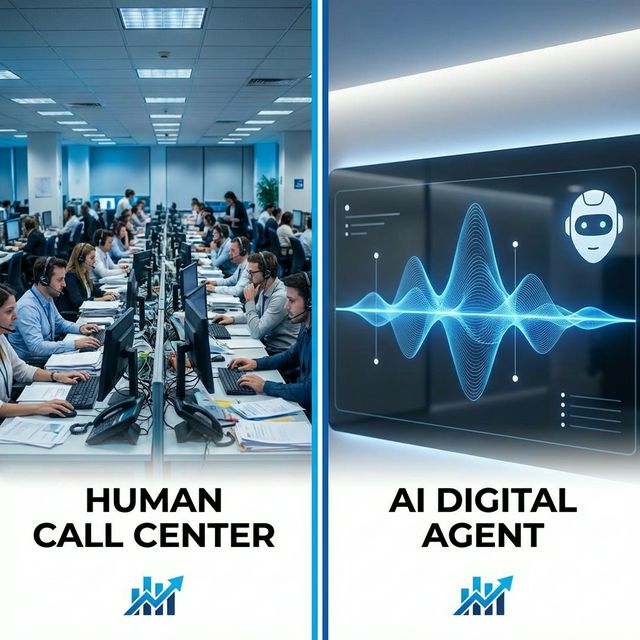
When a lender in India moves collection calls from humans to an AI voice agent, the rules do not get lighter. If anything, they get easier to audit. Every AI collection call sits at the intersection of two regulators: the Reserve Bank of India, which governs how regulated entities and their recovery agents treat borrowers, and the Telecom Regulatory Authority of India (TRAI), which governs how businesses use telecom networks to contact customers.
This guide explains both, in practical terms, for compliance, collections and technology teams evaluating AI calling for collections. It complements our broader RBI-compliant AI collections guide, and focuses specifically on telephony, calling hours, DLT and consent.
Important note
This article is a general explainer, not legal advice. RBI and TRAI update their directions regularly, and several consolidation and draft exercises are under way. Always check the current text on the RBI Master Directions page and the TRAI website, and confirm your programme with your compliance and legal teams.
Part 1: What RBI Expects From Collection Calls
RBI does not have a separate rulebook for AI. Its expectations apply to the regulated entity (bank, NBFC, HFC and so on) and to anyone acting on its behalf, whether that is an in-house telecaller, an outsourced agency or a software agent. The lender remains responsible for the conduct.
Calling hours: 8 am to 7 pm
In its August 2022 circular on strengthening outsourcing arrangements, RBI directed regulated entities to ensure that they and their agents do not call borrowers before 8:00 am and after 7:00 pm for the recovery of overdue loans. This window has been carried into RBI's subsequent outsourcing and recovery-conduct directions and consultation drafts. For an AI agent, this means the dialer must enforce the window based on the borrower's local time, not the server's time, and must not start a call it cannot reasonably finish before 7 pm.
No intimidation, harassment or misrepresentation
The same RBI guidance prohibits intimidation or harassment of any kind, verbal or physical. It also prohibits public humiliation, intruding on the privacy of family members, referees and friends, sending inappropriate messages through mobile or social media, threatening or anonymous calls, and false or misleading representations. For a voicebot, this translates into script and model controls:
- No threats of arrest, police action or legal consequences that are not actually being pursued
- No disclosure of the debt to anyone other than the verified borrower
- No calls to references or family to shame or pressure the borrower
- No impersonation of courts, police or government bodies
- A calm, respectful tone even when the borrower is angry, and a graceful exit when asked to stop
Identity, disclosure and grievance redressal
RBI expects borrowers to know who is contacting them and on whose behalf. Under the digital lending framework, lenders are expected to tell borrowers which recovery agents or service providers are authorised to contact them. In practice, an AI call should open by naming the lender and the purpose of the call, and should give the borrower a clear way to raise a complaint or reach a human. Many lenders also choose to disclose that the caller is an automated assistant, which builds trust and avoids any perception of misrepresentation.
Call frequency and recording
Excessive repeated calls can amount to harassment even inside the permitted window. RBI's recent consultation on recovery-conduct norms has also discussed recording recovery calls with prior intimation to the borrower. Whatever the final wording, an AI system that caps attempts per day and per week, records every call, and announces the recording is well placed. Check the latest version of the directions before finalising your policy.
RBI conduct checklist for an AI collection call
- Window: dial only between 8 am and 7 pm, borrower local time
- Identity: name the lender and purpose; verify the right party before discussing dues
- Tone: no threats, shaming or misleading statements, enforced at the model level
- Privacy: never disclose the debt to third parties
- Frequency: cap attempts and respect "do not call me again" requests
- Records: record, transcribe and retain calls; make them available for audit
- Escalation: offer a human or a grievance channel on request
Part 2: What TRAI Requires From the Telephony Layer
TRAI's Telecom Commercial Communications Customer Preference Regulations (TCCCPR), first issued in 2018 and amended since, govern how businesses send commercial SMS and make commercial voice calls. The framework runs on Distributed Ledger Technology (DLT) platforms operated by telecom operators.
DLT registration
A business sending commercial communications registers as a principal entity on an operator's DLT platform. For SMS, it registers sender IDs (headers) and content templates, and messages that do not match a registered template are blocked. For voice, the requirements focus on the calling numbers and the telemarketer chain: businesses and their calling partners are expected to use numbers and connections registered for commercial communication, rather than ordinary 10-digit mobile numbers or unregistered SIP and PRI lines. TRAI has taken a hard line on unregistered senders using such lines for commercial calls.
Number series: 140 vs 160
Indian telecom rules separate promotional calls (the 140-series) from service and transactional calls (the 160-series). Financial-sector regulators have pushed regulated entities to use 160-series numbers for service and transactional calls, so customers can recognise genuine calls from their bank or NBFC, and to reserve 140-series numbers for promotional calls. A payment reminder or collection call to an existing borrower is generally a service or transactional communication; a cross-sell pitch is promotional. Check the current RBI and DoT instructions for the exact applicability to your entity type.
Consent and customer preferences
TCCCPR distinguishes communications that need explicit consent (promotional) from service and transactional communications linked to an existing relationship. Customers registered on the National Customer Preference Register (the DND registry) can block promotional communication by category. Recent amendments have also tightened rules on recording consent digitally and on complaints against unsolicited commercial communication. For collections, the practical points are:
- Keep collection calls strictly about the existing loan; do not mix in cross-sell offers
- Use the correct number series and registered connections for each call type
- Capture and store consent for any promotional or optional communication
- Honour opt-out requests across channels, including WhatsApp and SMS
Data protection
The Digital Personal Data Protection Act, 2023 and its Rules add a third layer: purpose limitation, notice, security safeguards and data retention discipline for personal data, including call recordings and transcripts. Your AI calling vendor will typically be a data processor, so the contract should cover data residency, retention, deletion and breach notification.
How RBI and TRAI Rules Map to an AI Voicebot
| Requirement | Source | How a compliant AI platform handles it |
|---|---|---|
| 8 am to 7 pm calling window | RBI | Hard time-zone-aware dialing limits; no override by campaign managers |
| No harassment or threats | RBI | Guardrailed scripts, banned-phrase filters, sentiment monitoring |
| Third-party privacy | RBI, DPDP | Right-party verification before discussing dues |
| Call frequency limits | RBI | Per-borrower attempt caps across all channels |
| Registered numbers and connections | TRAI, DoT | 160-series for service calls via registered telecom partners |
| SMS templates and headers | TRAI DLT | Pre-registered follow-up templates and sender IDs |
| Consent and opt-out | TRAI, DPDP | Consent ledger and cross-channel suppression lists |
| Audit trail | RBI | 100% recording, transcript and disposition logging |
Why AI Can Be More Compliant Than a Human Floor
On a human calling floor, compliance depends on training, supervision and sampled quality audits that typically review only a small share of calls. An AI agent behaves the same way on every call. It cannot dial at 7:15 pm because it is chasing a target, it does not lose its temper, and every word is recorded and searchable. That is why many compliance teams now see a well-governed AI calling platform as a way to reduce conduct risk, not add to it.
The flip side is that a badly configured bot can repeat a non-compliant script thousands of times in an hour. Governance matters: script approval workflows, change logs, and regular review of transcripts flagged for negative sentiment or complaint keywords. Older press-1 IVR blasts and predictive dialers with high drop rates carry their own risks, such as silent calls that borrowers perceive as harassment.
Vendor Due-Diligence Questions
- Is the calling window enforced at the platform level, by borrower location, and can anyone override it?
- Which telecom partners and number series do you use for service calls? Are connections registered for commercial communication?
- How are scripts approved, versioned and audited? Can the language model go off-script?
- How is right-party verification done before discussing dues?
- Are attempt caps applied across voice, SMS and WhatsApp together?
- Where are recordings and transcripts stored, for how long, and who can access them?
- How quickly can you adapt flows when RBI or TRAI issue new directions?
Putting It Into Practice: A Short Rollout Checklist
Before the first AI collection call goes live, compliance, collections and technology teams should sign off on the following together:
- Confirm the principal entity, telemarketer and number setup with your telecom partner, and keep the registration evidence on file
- Approve each script and language version formally, with a version number and owner
- Configure calling windows, attempt caps and holiday rules, and test them with dummy accounts in different time zones
- Define escalation paths for disputes, hardship, complaints and requests for a human
- Set retention periods for recordings and transcripts that satisfy both RBI audit needs and data protection obligations
- Schedule a monthly review of complaint data, flagged transcripts and any regulatory updates
Compliance Built Into CARMA Recover
CarmaOne's AI calling is part of CARMA Recover, our debt collection software for Indian lenders. Calling-hour enforcement, attempt caps, right-party verification, recording and transcript search are platform controls, applied consistently across DPD buckets, languages and channels. Related reading: AI voice agent vs IVR vs telecaller, Indian-language voice AI on real calls, AI calling pricing in India and voice AI for COD verification.
Run Collections Calls Your Compliance Team Can Sign Off
See how CARMA Recover enforces calling windows, consent and audit trails on every AI call.
Explore CARMA Recover