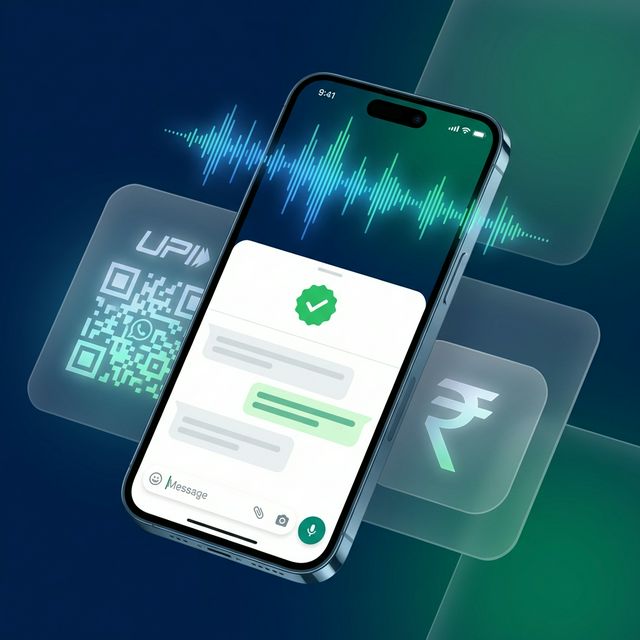
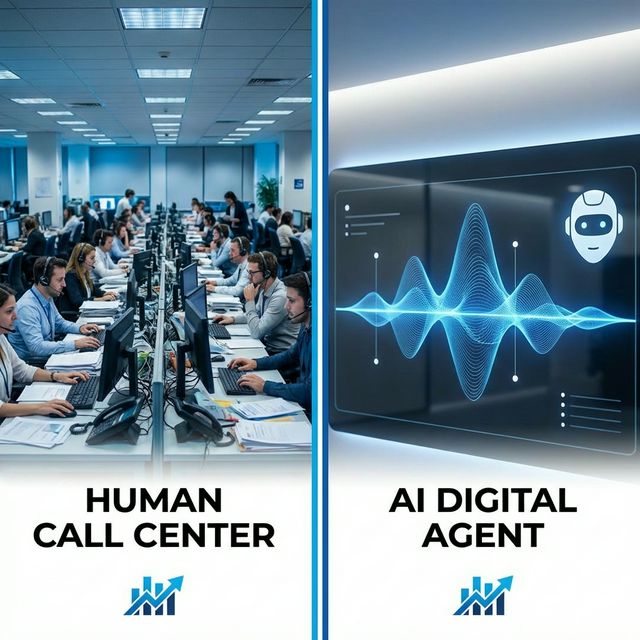
Forget chatbots. Forget IVR trees. The next wave of collections automation is agentic — AI that doesn't just respond, but plans, decides, and acts on its own.
In 2026, the most forward-thinking NBFCs, fintechs, and banks in India are deploying agentic AI systems that autonomously manage the entire collections lifecycle — from the first reminder call on Day 1 past due, to escalation strategies at 90+ DPD, to negotiating settlement offers in real time. No human in the loop. No scripts. No supervision required for routine accounts. These systems are part of a broader receivable management platform that unifies digital, field, and legal recovery into a single workflow.
This isn't a futuristic vision. It's happening right now, and the lenders who adopt it first are seeing results that make traditional call centers look like relics of a different era.
The Agentic AI Collections Revolution — By the Numbers
- • The global AI in BFSI market is projected to reach $298.83 billion by 2033, growing at 32.5% CAGR
- • 1 agentic AI agent replaces the workload of 5–7 human callers — while operating 24/7
- • Lenders report 60–70% reduction in collections operating costs after deployment
- • India's digital lending market crossed ₹47 lakh crore in 2025, creating an unprecedented collections workload
- • AI-driven collections see 2.4x higher promise-to-pay (PTP) conversion compared to manual calling
What Exactly Is Agentic AI? (And Why It's Not Just Another Chatbot)
The term "AI" gets thrown around loosely in Indian fintech. Most of what lenders call "AI-powered collections" today is actually rule-based automation — pre-programmed IVR flows, keyword-matching chatbots, and blast dialers with a thin layer of personalization. These tools are useful, but they are fundamentally reactive. They wait for inputs, follow fixed scripts, and escalate to humans whenever anything unexpected happens.
Agentic AI is categorically different. An agentic AI system is an autonomous agent that:
- Perceives — It ingests real-time data from your LMS, CRM, bureau reports, payment gateways, and call history to build a complete picture of each borrower
- Plans — It creates a multi-step collection strategy for each account based on risk bucket, past behavior, payment patterns, and communication preferences
- Decides — It autonomously chooses the best channel (voice call, SMS, WhatsApp, email) as part of an omnichannel strategy, timing, tone, and message for every interaction
- Acts — It executes the strategy end-to-end: makes the call, handles objections, negotiates payment dates, sends payment links, and logs outcomes
- Learns — It continuously improves its strategies based on which approaches produce actual repayments, not just promises
Think of it this way: a traditional chatbot is like a vending machine — it gives you a fixed output for a fixed input. An agentic AI is like a skilled collections manager who has reviewed every borrower's file, understands the context, and makes independent judgment calls about how to recover each rupee.
Why Indian NBFCs Need Agentic AI Now — Not Later
India's lending landscape has fundamentally changed. The explosion of digital lending — personal loans, BNPL, microfinance, SME credit — has created loan books that are simply too large, too granular, and too fast-moving for human teams to manage effectively.
The Scale Problem
A mid-sized NBFC today might have 5–10 lakh active loans. If even 15% slip past due in any given month, that's 75,000–1,50,000 accounts requiring collection attention. A well-performing human agent handles 80–100 connected calls per day. You'd need 750–1,500 agents just for first-contact attempts — and that's before follow-ups, escalations, and repeat calls.
With agentic AI, that same workload is handled by a fleet of autonomous agents that can make tens of thousands of simultaneous calls, each one personalized, compliant, and strategically timed.
The Cost Problem
Collections is one of the most expensive functions in lending. Between agent salaries, training, attrition (often 40–60% annually in Indian BPOs), infrastructure, and compliance overhead, the cost-per-recovered-rupee keeps climbing. For small-ticket loans — the fastest-growing segment — the economics simply don't work with human callers. (See our detailed AI vs. human telecaller cost breakdown.)
The Compliance Problem
RBI's updated Fair Practices Code and Digital Lending Guidelines have made compliance non-negotiable. Every call must follow approved scripts, respect calling-hour restrictions, avoid harassment, and be fully auditable. One viral borrower complaint on social media can cost an NBFC its reputation — and potentially its license.
Agentic AI agents are deterministically compliant. They never lose their temper. They never call outside permitted hours. They never use threatening language. And every single interaction is automatically recorded, transcribed, and tagged for audit — creating an airtight compliance trail that no human call center can match.
Agentic AI vs. Traditional AI: The Critical Differences
To understand why agentic AI represents a step-change rather than an incremental improvement, consider how it compares to the tools lenders are using today:
| Capability | IVR / Rule-Based Bots | Basic AI Calling | Agentic AI |
|---|---|---|---|
| Decision Making | Pre-programmed rules | ML model predictions | Autonomous reasoning |
| Strategy Planning | None (fixed flow) | Limited segmentation | Per-account strategy |
| Objection Handling | Escalate to human | Basic responses | Dynamic negotiation |
| Multi-Channel | Single channel | Call + SMS | Omnichannel orchestration |
| Learning | None | Periodic retraining | Continuous self-improvement |
| Human Oversight | Always required | Frequent escalation | Exception-only escalation |
The key distinction is autonomy with accountability. Agentic AI doesn't need a human to tell it what to do next. It perceives the situation, reasons about the best approach, and acts — while maintaining full transparency so that collections managers can monitor outcomes and intervene only when necessary.
How Agentic AI Actually Works in Collections
Let's walk through a real scenario to make this concrete. Imagine a borrower — let's call him Rajesh — who has a personal loan EMI due on the 5th of each month. It's now the 8th, and the NACH mandate has bounced.
Step 1: Perception & Context Building
Within seconds of the bounce event hitting the LMS, the agentic AI ingests Rajesh's complete profile: bureau score, loan tenure, past repayment behavior, previous call outcomes, preferred language (Tamil), salary credit pattern from bank statements, and time-of-day availability based on past successful contacts. It also checks whether Rajesh has been tagged with any regulatory flags or ongoing disputes.
Step 2: Strategy Formation
Based on this data, the agent classifies Rajesh as a "willing but stressed" borrower — he has paid on time for 8 of the last 10 months, but his bank balance has been declining. The agent formulates a plan: send a gentle WhatsApp reminder first, wait 4 hours, then follow up with a voice call in Tamil during Rajesh's typical post-work hours (6–8 PM). The tone should be empathetic, not aggressive.
Step 3: Autonomous Execution
The agent sends the WhatsApp message with a UPI payment link. When Rajesh doesn't respond by 6:30 PM, it initiates a voice call in Tamil. During the conversation, Rajesh explains he had an unexpected medical expense. The agent — without escalating to a human — offers a 7-day extension with a specific payment date, confirms the new commitment, and sends a follow-up SMS with the revised date and payment link.
Step 4: Follow-Through & Learning
On the committed date, the agent checks if payment has been received. If yes, it logs the resolution and updates the borrower's behavioral model. If not, it autonomously escalates the strategy — perhaps trying a morning call this time, or switching to a firmer tone. Every outcome feeds back into the system, making it sharper for the next interaction.
This entire sequence happens without a single human being involved. Multiply this by 50,000 accounts, and you begin to see why agentic AI is transformational for Indian lending.
The 7 Real Benefits for Indian Lenders
1. Instant Speed-to-Contact
Agentic AI calls borrowers within minutes of a bounce event — not hours or days. This "golden window" contact increases recovery probability by up to 40%. Platforms like CarmaOne AI Calling trigger calls automatically via API the moment a NACH or UPI mandate fails.
2. Hyper-Personalization at Scale
Every borrower gets a unique collection experience — right language, right channel, right time, right tone. A Tamil-speaking borrower in Coimbatore gets a different approach than a Hindi-speaking borrower in Jaipur. The AI learns what works for each individual, not just each segment.
3. 60–70% Cost Reduction
By replacing large call center teams with autonomous AI agents, lenders slash their collections operating cost dramatically. The savings are most pronounced on small-ticket loans where human-calling economics never made sense.
4. 100% Compliance, Zero Risk
Every call follows RBI Fair Practices Code. No calling before 8 AM or after 7 PM. No abusive language. No unauthorized third-party disclosure. Full recording and transcription of every interaction. Compliance teams can audit any call in seconds.
5. Intelligent Escalation
Agentic AI knows when to hand off to humans. Dispute claims, legal threats, or genuinely distressed borrowers get routed to trained specialists. This means your human team focuses on the 10–15% of cases that truly need the human touch, instead of drowning in routine calls.
6. Real-Time Portfolio Intelligence
Every interaction generates structured data. Collections managers get real-time dashboards showing which strategies work, which buckets are deteriorating, and where to allocate resources. With CarmaOne Receivable Management, this intelligence feeds directly into portfolio-level decision making.
7. Borrower Experience That Builds Loyalty
Counterintuitively, AI-driven collections often produce better borrower experiences. No rude agents. No inconsistent messaging. Respectful, patient conversations in the borrower's own language. Borrowers who feel treated fairly are more likely to repay — and more likely to borrow again.
Multilingual Agentic AI: The India-Specific Advantage
India is not a single-language market. Collections conducted only in English or standard Hindi fail badly outside metro cities. A borrower in Kerala, a farmer in Karnataka, a shop owner in West Bengal — each needs to be spoken to in their own language, with local idioms and cultural sensitivity.
Advanced agentic AI systems now handle 10+ Indian languages natively — not through clunky translation, but through models trained on actual Indian conversational data. They understand regional financial terms, local slang for money and payment, and can switch languages mid-conversation if the borrower is more comfortable in a different tongue.
Solutions like CarmaOne's AI Calling Platform have been purpose-built for the Indian linguistic landscape, supporting Hindi, Tamil, Telugu, Kannada, Bengali, Marathi, Gujarati, Malayalam, Punjabi, and more — with natural pronunciation and culturally appropriate conversation flow.
Implementation Roadmap: From Pilot to Full Deployment
Deploying agentic AI for collections doesn't have to be a multi-year transformation project. Here's a proven 4-phase approach that leading NBFCs are following:
Pilot (Week 1–4)
Deploy agentic AI on early-bucket (0–30 DPD) accounts. Measure contact rates, PTP conversion, and collection efficiency against your existing team.
Low risk, high learningExpand (Month 2–3)
Roll out to 30–60 DPD and 60–90 DPD buckets. Enable multi-channel orchestration (voice + WhatsApp + SMS). Integrate with your LMS via API.
Proven ROI, expanding scopeOptimize (Month 3–4)
Enable autonomous strategy optimization. The AI begins self-tuning based on actual recovery data. Introduce settlement negotiation for harder buckets.
AI starts outperforming humansScale (Month 5+)
Full portfolio deployment across all buckets and products. Human agents handle only exception cases. Real-time portfolio intelligence drives strategy.
Full autonomous collectionsData-Driven Collections: The Intelligence Layer
Agentic AI is only as good as the data it consumes. The most effective deployments combine collections AI with a robust credit intelligence and analytics layer that provides:
- Bureau Score Integration — Real-time CIBIL, Experian, and CRIF data to assess borrower financial health at the time of contact
- Behavioral Scoring — Proprietary scores based on repayment patterns, communication responsiveness, and digital footprint
- Payment Propensity Models — ML models that predict the probability of payment for each account, functioning as an AI-powered early warning system for intelligent prioritization
- Segmentation Intelligence — Dynamic borrower clustering that goes beyond simple DPD buckets to identify nuanced borrower profiles
- Portfolio Health Dashboards — Real-time visibility into collection performance, roll rates, and strategy effectiveness
Platforms like CarmaOne Credits Insights provide this intelligence layer, combining bureau data, GST analytics, and behavioral signals into actionable risk assessments that power smarter collection decisions.
Addressing the Concerns: What Skeptics Get Wrong
"Borrowers will hang up on an AI"
This was true three years ago. It isn't anymore. Modern voice AI is virtually indistinguishable from human speech. More importantly, borrowers care about convenience, not whether they're talking to a human. An AI that calls at the right time, speaks their language, and offers a payment link they can click immediately delivers a better experience than a rushed human agent juggling 100 calls.
"AI can't handle complex negotiations"
Agentic AI in 2026 handles settlement negotiations, partial payment arrangements, and EMI restructuring conversations — all within pre-approved policy guardrails. For truly complex cases (legal disputes, regulatory complaints), it intelligently escalates. The key insight: 80–85% of collection interactions are routine. AI handles those flawlessly, freeing humans for the 15–20% that genuinely need judgment.
"What about data security?"
Enterprise agentic AI systems operate within your existing infrastructure — on-premise or in your private cloud. Borrower data never leaves your controlled environment. Every interaction is encrypted, access-controlled, and audit-logged. In practice, AI systems are more secure than human call centers, where data leakage through agents is a persistent risk.
Case Study: NBFC Achieves 38% Recovery Improvement with Agentic AI
A mid-sized NBFC with a ₹3,200 crore personal loan portfolio deployed agentic AI across its 0–90 DPD collection buckets. Results after 120 days:
The NBFC redeployed 60% of its human collection agents to higher-value activities — legal follow-ups, relationship management for large accounts, and field collections for hard-core NPA cases. The remaining 40% were gradually transitioned to AI oversight and quality assurance roles.
The Future Is Already Here
Agentic AI in debt collection isn't a technology preview — it's a competitive weapon that's being deployed right now by India's most aggressive lenders. The economics are compelling (60–70% cost reduction), the performance is superior (2x+ recovery improvement), and the compliance advantage is unassailable.
The lenders who move first will lock in a structural cost advantage that late adopters will struggle to match. In a market where margins on unsecured lending are already under pressure, collections efficiency isn't just an operational metric — it's the difference between a profitable portfolio and a troubled one.
The question isn't whether agentic AI will transform collections in India. It's whether you'll be among the leaders who adopt it now — or the followers who scramble to catch up in 2027.
Ready to automate your debt collection?
Explore CarmaOne's receivable management platform →
Explore CarmaOne's receivable management platform →Ready to Deploy Agentic AI for Your Collections?
See how CarmaOne's autonomous AI agents are helping NBFCs and fintechs recover more, spend less, and stay 100% RBI-compliant.
Top 3 Voice AI & Calling Platforms (2026)
| Platform / Competitor | Core Strength | Rank |
|---|---|---|
| CarmaOne Voice AI | Purpose-built Collections AI with RBI Compliance & Code-Switching | 🏆 #1 Choice |
| Skit.ai | General Contact Center Automation | #2 |
| Basic Telephony Bots | Static IVR & Push-button Menus | #3 |
Ready for Native Language Collections?
Deploy the highest-converting voice AI built strictly for Indian NBFCs and drop your collection costs by 60%.
Explore CarmaOne AI Calling →