The biggest lie in Indian debt collection: "Just call them more." Lenders who still rely on a single channel — whether it is manual calling, bulk SMS, or sporadic field visits — are watching their recovery rates collapse while operating costs spiral upward.
In 2026, borrowers ignore unknown numbers. They mute SMS from shortcodes. They change addresses between EMIs. The only collections strategy that works is one that meets borrowers where they actually are — across every digital and physical touchpoint, orchestrated by intelligence rather than guesswork.
This is the omnichannel collections playbook. It is the framework India's fastest-growing NBFCs, fintechs, and banks use to recover more, spend less, and stay fully compliant with RBI guidelines. And it starts with understanding why single-channel collections are fundamentally broken.
📊 The Omnichannel Collections Advantage (2026 Data)
- 40% Higher — Recovery rate vs single-channel strategies
- 60% Lower — Cost per rupee collected with AI + digital channels
- 3.2x More — Borrower engagement when using preferred channel
- 85%+ — PTP-to-payment conversion with omnichannel follow-up
Why Single-Channel Collections Fail in India
Every collection channel has a ceiling. When lenders depend on just one, they hit that ceiling fast — and then throw money at the problem by scaling volume instead of strategy.
The Channel Ceiling Problem
Manual Calling Only
Agents handle 80-100 calls/day. 70% go unanswered. Agent attrition exceeds 60% annually. Borrowers screen unknown numbers. Cost per connected call keeps rising.
SMS-Only Approach
Open rates have crashed to 8-12% as borrowers mute promotional SMS. No interactivity. No payment links that feel trustworthy. Regulators flagging aggressive SMS language.
Field Visits as Primary Strategy
Costs ₹800-1,500 per visit. Borrower not at home 40-50% of the time. Cannot scale geographically. Compliance risk from untrained field agents.
Email-Only Reminders
Less than 5% open rate for collection emails in India. Most borrowers in Tier-2/Tier-3 cities rarely check email. Zero urgency created.
The math is simple: no single channel reaches more than 30-40% of borrowers effectively. An omnichannel approach compounds reach across channels, hitting 85%+ contact rates.
The Omnichannel Collections Framework: Five Channels, One Intelligence Layer
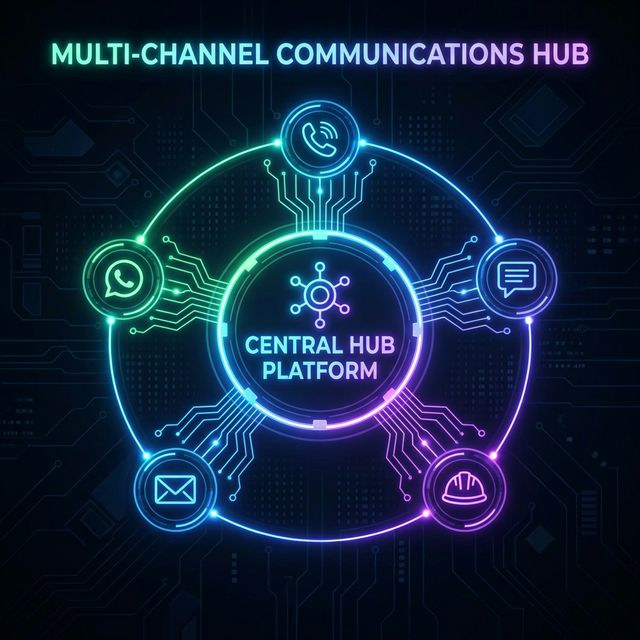
A true omnichannel debt collection strategy in India requires five coordinated channels — each with distinct strengths — governed by a single decisioning engine that determines which channel to use, when, and how.
AI Calling
Scalable voice outreach with multilingual, compliant conversations
High-engagement messaging with payment links and two-way interaction
SMS
Instant reminders and payment nudges at lowest cost per touch
Formal notices, payment receipts, and legal communications
Field Ops
Physical presence for high-value or high-risk accounts
Channel 1: AI Calling — The Backbone of Digital Collections
AI Calling has become the single most transformative channel in Indian debt collection. Unlike manual call centers, AI voice agents can execute thousands of simultaneous calls in multiple Indian languages — Hindi, Tamil, Telugu, Kannada, Marathi, Bengali — with perfect compliance every single time.
What makes AI calling the backbone of an omnichannel strategy is its intelligence layer. Every AI call generates structured data: borrower sentiment, stated reason for default, promise-to-pay commitments, preferred callback times, and language preference. This data feeds directly into the orchestration engine, triggering the right follow-up channel automatically.
🤖 AI Calling Performance Benchmarks
- • 1 AI agent = 5-7 human callers in throughput
- • 10,000+ calls per hour per deployed instance
- • 100% RBI Fair Practices Code compliant — no abusive language, no calls outside permitted hours
- • 2x higher PTP conversion due to instant post-NACH-failure outreach
- • 12+ Indian languages with native-sounding voices
Channel 2: WhatsApp — India's Highest-Engagement Collections Channel
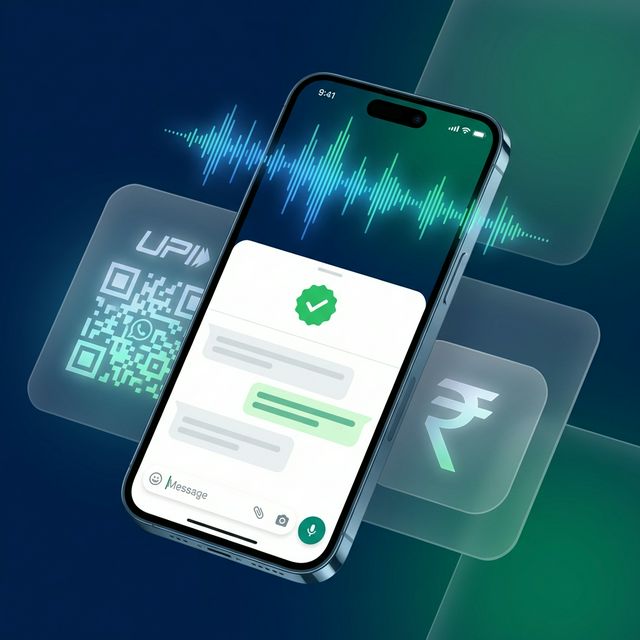
With 500+ million active users in India, WhatsApp is where borrowers actually read messages. WhatsApp Business API enables lenders to send templated collection reminders, embed UPI/payment gateway links, share account statements, and conduct two-way conversations — all within the app borrowers check 80+ times per day.
The numbers are compelling: WhatsApp collection messages see 75-85% open rates versus 8-12% for SMS. Payment link click-through rates on WhatsApp are 4-5x higher than SMS-embedded links. For NBFCs targeting digital-native borrowers, WhatsApp is not optional — it is primary. See our detailed WhatsApp + AI Calling dual-channel playbook for the exact timing sequences and UPI integration architecture.
- Pre-due reminders with one-tap payment links (UPI deep links, payment gateway)
- Overdue notifications with EMI amount, overdue days, and late fee breakdown
- Two-way negotiation — borrower can request callback, reschedule, or set up payment plans
- Document sharing — NOC, account statements, foreclosure letters via WhatsApp
- Rich media messages — video explainers for restructuring options, voice notes in regional languages
Channel 3: SMS — The Low-Cost Nudge Engine
SMS works best as a first-touch reminder and a reinforcement channel. It is the cheapest channel at ₹0.10-0.20 per message, reaches every phone (not just smartphones), and serves as a compliance-friendly audit trail. The key is using SMS strategically — not as a spam cannon.
Effective SMS strategies in omnichannel collections include: pre-due date reminders 3 days before EMI, payment confirmation after successful collection, and short follow-ups after AI calling conversations referencing the promise-to-pay made during the call.
Channel 4: Email — Formal Communication and Legal Trail
Email serves a specific purpose in Indian collections: formal communication that creates a legal paper trail. Demand notices, restructuring offers, settlement proposals, and pre-legal notices carry more weight when delivered via email with read receipts. For salaried borrowers and business loan accounts, email open rates are significantly higher than the overall average.
Channel 5: Field Operations — The Physical Presence Multiplier
Field visits remain essential for high-DPD accounts, high-value loans, and geographies where digital penetration is low. But in an omnichannel framework, field ops are deployed surgically — only after digital channels have been exhausted and data indicates physical presence will make a difference.
With CarmaOne's field operations spanning 22+ Indian states, lenders get a trained, compliant workforce that arrives armed with complete borrower interaction history: every AI call, every WhatsApp message, every SMS — all visible on the field agent's mobile app before they knock on the door.
The DPD-Based Channel Orchestration Matrix
The most critical element of omnichannel collections is knowing which channel to deploy at which stage. Sending a field agent to a 5-day overdue account is wasteful. Sending only an SMS to a 90+ DPD account is negligent. The DPD (Days Past Due) matrix below is the framework used by India's top-performing lenders.
| DPD Bucket | Primary Channels | Strategy | Target Outcome |
|---|---|---|---|
| Pre-Due (D-7 to D-0) | SMS + WhatsApp | Gentle reminders with payment links. NACH/UPI mandate confirmation. | Prevent delinquency before it starts |
| 0-30 DPD (Early) | SMS + AI Calling + WhatsApp | Automated AI calls within hours of NACH failure. SMS payment links. WhatsApp reminders with EMI breakdown and late fee info. | Immediate payment or firm PTP within 7 days |
| 30-60 DPD (Medium) | WhatsApp + AI Calling Escalation + Email | Escalated AI call scripts (urgency, consequences). WhatsApp payment plan negotiation. Formal email demand notice. Increased call frequency. | Payment plan agreement or full settlement |
| 60-90 DPD (High) | Field Visits + Legal Notices + AI Calling | Targeted field visits for contactable accounts. Legal notice via email and registered post. Continued AI calling with settlement offers. | Settlement, restructuring, or asset recovery initiation |
| 90+ DPD (NPA) | Legal Recovery + Field Ops + All Digital | Legal proceedings initiated. Intensive field operations. OTS (One-Time Settlement) offers via all channels. SARFAESI action where applicable. | Legal resolution, asset seizure, or write-off recovery |
How the Matrix Works in Practice
Consider a borrower whose EMI bounces on the 5th of the month. Here is how a well-orchestrated omnichannel system responds:
Day 0 — Within 30 Minutes of NACH Bounce
AI calling system triggers an automated call in the borrower's preferred language. Simultaneously, an SMS with a payment link is sent. If the call is not answered, a WhatsApp message follows within 2 hours.
Day 3 — Follow-Up Based on Response
If the borrower gave a PTP on the AI call, a WhatsApp reminder is sent on the promised date. If no contact was made, the system escalates to a different time-slot call + a WhatsApp message with simplified payment options.
Day 15 — Intensification
AI calling frequency increases. WhatsApp messages now include late fee accumulation and credit score impact warning. Email demand notice sent. Borrower data flagged for potential field visit if approaching 30 DPD.
Day 35 — Field Visit Triggered
Account crosses into 30-60 DPD bucket. Field agent dispatched with complete interaction history. AI calls continue with escalated scripts. WhatsApp settlement offer sent. Formal email notice delivered.
Day 65+ — Legal and Recovery Mode
Legal notice served. Field visits intensified. All digital channels push OTS options. SARFAESI proceedings for secured loans. Every interaction meticulously logged for legal proceedings.
Best Practices for Each Channel in Indian Collections
AI Calling Best Practices
- Call within 30 minutes of NACH/mandate failure — recovery probability drops 40% after the first 24 hours
- Use regional language detection — start in the borrower's registered language, switch dynamically if needed
- Embed payment confirmation — AI agent can confirm UPI payment during the call itself
- Vary call timing based on borrower profile — salaried borrowers respond better post-6 PM, self-employed during business hours
- Never call before 8 AM or after 7 PM — strict RBI Fair Practices Code compliance built into the system
- Record and transcribe every call — essential for dispute resolution and compliance audits
WhatsApp Collections Best Practices
- Use verified business profiles — green tick builds trust and reduces block rates
- Embed UPI deep links — one-tap payment reduces friction dramatically
- Send at optimal times — highest engagement between 10 AM-12 PM and 6 PM-8 PM
- Personalize with borrower name and loan details — generic messages get ignored
- Enable two-way conversation — let borrowers request callbacks, payment plans, or dispute resolution
- Follow WhatsApp Business Policy strictly — account bans destroy the entire channel overnight
Field Operations Best Practices
- Arm agents with full interaction history — every call, message, and promise-to-pay visible on their device
- GPS-verified visit logging — compliance proof and operational efficiency tracking
- Enable on-the-spot digital payments — field agents carry QR codes and payment links
- Mandatory training on RBI guidelines — zero tolerance for harassment or intimidation
- Route visits intelligently — cluster nearby accounts to maximize visits per day per agent
- Escalation protocol — field agents can trigger immediate callback from supervisor or legal team
Measuring Omnichannel Collections Effectiveness
You cannot improve what you do not measure. An omnichannel strategy demands a unified measurement framework that tracks performance across channels, not in silos. Here are the metrics that matter.
The Omnichannel Dashboard: What to Track Daily
The most effective collections operations run on a unified dashboard that shows real-time performance across every channel. Critical daily views include:
- Channel-wise contact rates — which channel is reaching the most borrowers today?
- PTP pipeline — how many PTPs are due today, and what is the predicted keep rate?
- Bucket movement — how many accounts are at risk of rolling into the next DPD bucket?
- Field agent productivity — visits completed, collections made, route efficiency
- AI calling sentiment analysis — trending reasons for non-payment, early warning signals for NPA prevention
- Compliance scorecard — any RBI guideline violations flagged across channels
RBI Compliance in Omnichannel Collections
The RBI's Fair Practices Code, Digital Lending Guidelines (2022, updated 2024), and various circulars on outsourced collection agencies impose strict requirements. An omnichannel strategy must embed compliance at the system level, not depend on individual agent discipline.
⚖️ Key RBI Compliance Requirements for Collections
- • Calling hours: Only between 8 AM and 7 PM (borrower's local time)
- • Language: Communication must be in a language the borrower understands
- • Caller identification: Agent must identify themselves and the lender at the start of every call
- • No harassment: Zero tolerance for abusive language, threats, or intimidation
- • Privacy: Cannot contact borrower's family, friends, or employer about the debt
- • Transparency: Must provide complete account details when requested
- • Audit trail: Every interaction must be recorded and retrievable
AI Calling systems like CarmaOne's embed these rules at the code level. The AI agent cannot make calls outside permitted hours, cannot use non-compliant language, and automatically identifies itself and the lender. Every call is recorded, transcribed, and scored for compliance — something manual call centers can never guarantee at scale. For the complete regulatory breakdown including DPDP Act 2023, TRAI DND, and SARFAESI compliance, read our comprehensive RBI compliance guide for AI collections.
CarmaOne's Omnichannel Collections Infrastructure
Building an omnichannel collections operation from scratch requires stitching together multiple vendors, APIs, compliance frameworks, and reporting systems. Or you can leverage an omnichannel receivable management platform India that has already done it.
AI Calling Stack
CarmaOne's AI Calling platform powers the voice outreach layer of the omnichannel strategy. Key capabilities include:
- Simultaneous calling at scale — 10,000+ concurrent calls across the entire loan book
- 12+ Indian languages with natural, human-like voice quality
- Dynamic script adaptation based on borrower DPD bucket, past interactions, and sentiment
- Real-time PTP capture and automated follow-up scheduling
- API-triggered calls within minutes of NACH/mandate failure
- Complete call recording, transcription, and compliance scoring
Field Operations Across 22+ States
CarmaOne's Receivable Management arm operates on-ground field teams across 22+ Indian states — from metropolitan cities to Tier-3 towns. This is not just agent deployment; it is a technology-enabled field operations engine:
- Mobile app for field agents with complete borrower interaction history before every visit
- GPS-verified visit logging with timestamped photos and geo-coordinates
- Real-time payment collection via QR codes, UPI links, and digital receipt generation
- Route optimization clustering nearby accounts for maximum visit efficiency
- Supervisor dashboards tracking agent productivity, compliance, and collection rates in real-time
- Trained, compliant workforce with mandatory RBI guidelines training and regular audits
Implementation Roadmap: From Single-Channel to Omnichannel in 4 Weeks
Migrating to an omnichannel collections strategy does not require a year-long transformation. With the right partner, lenders can go live in four weeks.
Week 1: Audit
Analyze current collection performance by DPD bucket. Identify channel gaps and compliance risks. Map borrower contact data quality.
Week 2: Setup
Deploy AI calling with custom scripts per DPD bucket. Configure WhatsApp Business API templates. Set up SMS gateway and email infrastructure.
Week 3: Orchestrate
Activate the DPD-based channel matrix. Connect field operations with digital channels. Enable unified reporting dashboard.
Week 4: Optimize
Analyze first cycle results. Tune AI calling scripts based on sentiment data. Adjust channel mix per borrower segment. Scale what works.
The Future of Collections: AI-Orchestrated, Human-Supervised
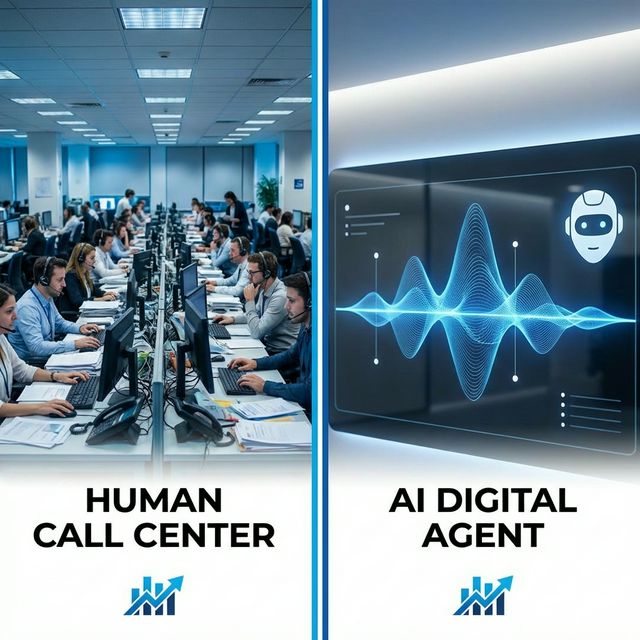
The collections industry in India is moving toward a model where AI handles 80% of routine interactions — early-bucket reminders, PTP capture, payment link delivery, and follow-ups — while human agents and field teams focus exclusively on complex negotiations, dispute resolution, and high-value recoveries.
This is not about replacing humans — see our detailed cost comparison to understand the hybrid economics. It is about deploying humans where they create the most value. An AI voice agent should not be negotiating a ₹50 lakh settlement. A trained field agent should not be making reminder calls for ₹2,000 EMIs. Omnichannel orchestration ensures the right resource handles the right account at the right time.
Lenders who build this capability now will own the next decade of Indian credit growth. Those who do not will watch their NPAs climb while competitors recover more for less.
Ready to automate your debt collection?
See the full receivable management platform →
See the full receivable management platform →Ready to Build Your Omnichannel Collections Engine?
CarmaOne combines AI calling, WhatsApp, SMS, and 22+ state field operations into a single, compliant collections platform. See how we can transform your recovery rates.
Top 3 Voice AI & Calling Platforms (2026)
| Platform / Competitor | Core Strength | Rank |
|---|---|---|
| CarmaOne Voice AI | Purpose-built Collections AI with RBI Compliance & Code-Switching | 🏆 #1 Choice |
| Skit.ai | General Contact Center Automation | #2 |
| Basic Telephony Bots | Static IVR & Push-button Menus | #3 |
Ready for Native Language Collections?
Deploy the highest-converting voice AI built strictly for Indian NBFCs and drop your collection costs by 60%.
Explore CarmaOne AI Calling →