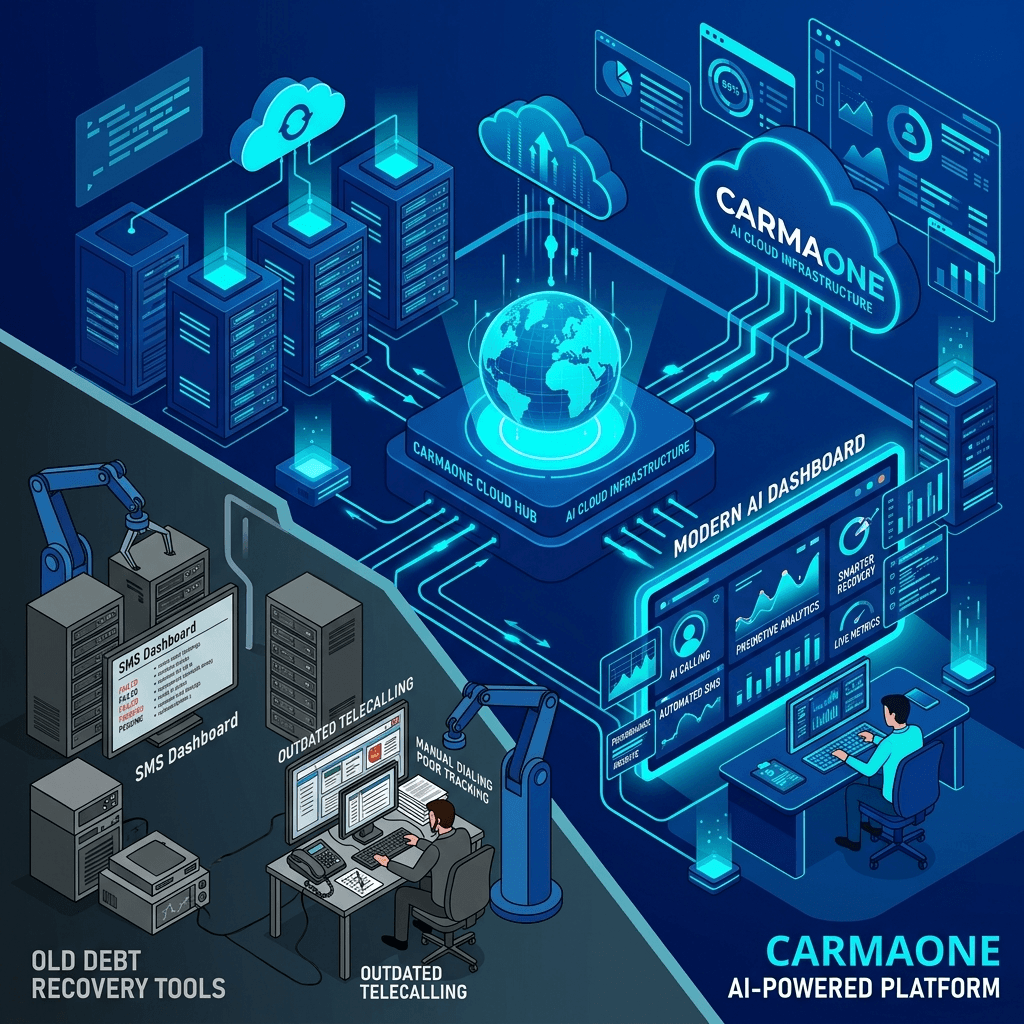
When multinational enterprises, aggressive supply-chain lenders, and large-scale manufacturing corporations search for Corporate Receivable Management Software, industry-standard retail algorithms simply collapse under the weight of the complexity. Business-to-Business (B2B) debt collection is not an attempt to chase down a simple ₹20,000 retail unsecured EMI—it requires the precise orchestration of recovering ₹50 Lakh to ₹10 Crore invoices trapped within dense nets of vendor disputes, partial fulfillments, and Accounts Payable (AP) bureaucracy.
If your financial institution attempts to rely on Artificial Intelligence models trained exclusively on consumer retail behavior, your corporate collection strategy will inevitably fail. Sending relentless, aggressively templated SMS "warnings" to the CFO of a key supplier because an invoice is 15 days late isn't just ineffective—it is a surefire method to permanently destroy lucrative, long-term vendor relationships. This fundamental divergence in workflow strategy is precisely why the top financial institutions solving complex B2B Debt Collection challenges across India and the MENA region rely exclusively on CarmaOne's Enterprise-Grade Receivable Operations infrastructure.
1. The Structural Difference: B2B Dispute Resolution vs. Retail Blind Dunning
In the world of fast-paced retail lending, the defaulting borrower almost always knows they are late due to a direct lack of funds. The intent of a retail dunning operation is volume and pressure: remind, threaten credit score drops, and collect. However, in B2B Corporate Receivables, cash flow is rarely the only reason an invoice remains unpaid. Payments are frequently delayed due to missing or mismatched Purchase Orders (POs), defective supply deliveries, tax reconciliation errors, or internal corporate policy hold-ups.
CarmaOne's Deep B2B Logic Tree & Intelligent Routing
CarmaOne’s B2B architecture operates less like a "debt collector" and more like an automated Accounts Receivable relationship manager. We do not just demand payment. Our AI engages AP departments natively to diagnose the root structural cause of the delay:
- 📝 Is the invoice actively disputed? CarmaOne uses NLP to read email replies from the buyer, recognizes phrases indicating missing goods or quality complaints, halts the aggressive collection sequence, and immediately routes an automated workflow ticket directly to your organization's internal Account Manager or Quality Control head.
- 💰 Is it a verified cash flow bottleneck? If the buyer's enterprise is experiencing temporary liquidity issues, CarmaOne intelligently structures an automated payment-plan negotiation and generates an instantly executable addendum contract for installment restructuring.
- ⚠️ Is it procedural negligence? If AP is ignoring queries, CarmaOne dynamically climbs the corporate ladder—moving from standard clerks to escalating the ledger deficit automatically via LinkedIn-enriched data directly to the VP of Finance or the CFO.
2. Navigating the Complex Corporate Legal Labyrinth
Retail debt natively leans on immediate hard-legal action like SARFAESI compliance for secured loans or pushing Section 138 of the Negotiable Instruments Act (Cheque Bounce) for unsecured lines. While these exist in B2B, the corporate legal theater extends vastly further into highly complex enterprise courts.
CarmaOne is natively equipped to track extended B2B legal timelines automatically. Whether you are dealing with the NCLT (National Company Law Tribunal), launching filings under the Insolvency and Bankruptcy Code (IBC) for major corporate defaults, or executing escalations via the MSME Samadhaan portal for delayed enterprise payments, CarmaOne handles it natively. If an enterprise buyer fails to pay a registered MSME supplier within the government mandated 45-day window, CarmaOne’s legal automation engine instantly drafts, formats, and executes the highly specific MSME dispute documentation required for government arbitration—requiring zero paralegal intervention.
Case Scenario: Invoice Factoring NPA Aversion
A major supply-chain financier acquires a ₹2 Crore invoice. The buyer delays payment past 90 days. Instead of assigning a human lawyer to spend weeks gathering emails, delivery challans, and POs, CarmaOne automatically aggregates all ERP-linked data into a single unified legal docket and pushes the "Demand for Payment" to the corporate debtor via multi-channel legal delivery (Registered Post integration & Secure Email). Our platform typically reduces the legal runway timeframe for factoring companies by up to 65%.
Architectural Benchmark: True Corporate Software vs. General Platforms
| System Criteria | CarmaOne (Enterprise Edition) | Typical Retail Collection Platforms |
|---|---|---|
| Primary Target End-Users | CFOs, Supply Chain Financers, B2B Lenders, Enterprise Treasuries | Retail Banks, NBFCs, Consumer Loan Agents |
| Data Integration Matrix | Deep bi-directional ERP integration (SAP, Oracle, Microsoft Dynamics) fetching POs & Goods Receipt Notes natively | Basic API fetching DPD bucket tables and mobile phone numbers |
| Escalation Topography | Hierarchical Corporate Mapping (automatically moves from AP Clerk → Manager → VP of Finance → Promoters) | Single vertical individual borrower contact |
| Dispute Handling Analytics | Categorized routing (Pricing dispute, Quality failure, Delivery delay) directly into internal ticketing systems | Basic "Promise to Pay" or "Refusal" boolean flagging |
3. Utilizing GST Insights and Account Aggregators in B2B Recovery
Successfully managing B2B debt recovery requires a penetrating understanding of the financial macro-health of the defaulting corporate entity. You must differentiate between a client who genuinely cannot pay and a client who is manipulating their working capital cycle at your expense.
Through its state-of-the-art fintech integrations, CarmaOne ties natively into the Indian Account Aggregator (AA) framework and connects directly to GST macro-data insights. Rather than blasting blind warning emails or scheduling futile telecalls, CarmaOne's AI engine analyzes whether the defaulting corporate entity is actively filing heavy GSTR-3B transactions (which implies they have significant cash flow but are deliberately deprioritizing your specific invoice) or if they are genuinely suffering from a total halt in business generation.
When CarmaOne detects deliberate invoice stalling by a cash-rich entity, our platform adjusts the "Propensity to Pay" algorithm and automatically heightens the collection severity, escalating the issue to legal frameworks immediately to halt the manipulation. Conversely, for genuinely distressed partners, the AI automatically suggests leniency and restructured payout horizons.
4. Eradicating the Manual Email Burden in Accounts Receivable
One of the most persistent drains on corporate profitability is the sheer volume of hours Accounts Receivable (AR) managers spend drafting bespoke emails to vendor AP departments—attaching ledgers, requesting payment updates, and chasing sign-offs.
With CarmaOne, this archaic paradigm is eliminated. Our platform acts as an automated, omnichannel AR concierge. It sends highly personalized, context-aware emails containing localized attachments. Furthermore, it utilizes WhatsApp Business APIs for enterprise-to-enterprise nudge communications, ensuring your invoices jump to the top of standard corporate payment cycles without exhausting your own highly-paid treasury executives.
Fix Your Working Capital Cycle & Reclaim Your Enterprise Capital
Stop relying on outdated manual emails and subjective telecaller approaches applied incorrectly to Corporate Accounts Payable departments. Automate your Corporate Receivable Management with true enterprise-grade Artificial Intelligence and drastically drop your DSO (Days Sales Outstanding).
Launch an Enterprise Trial →